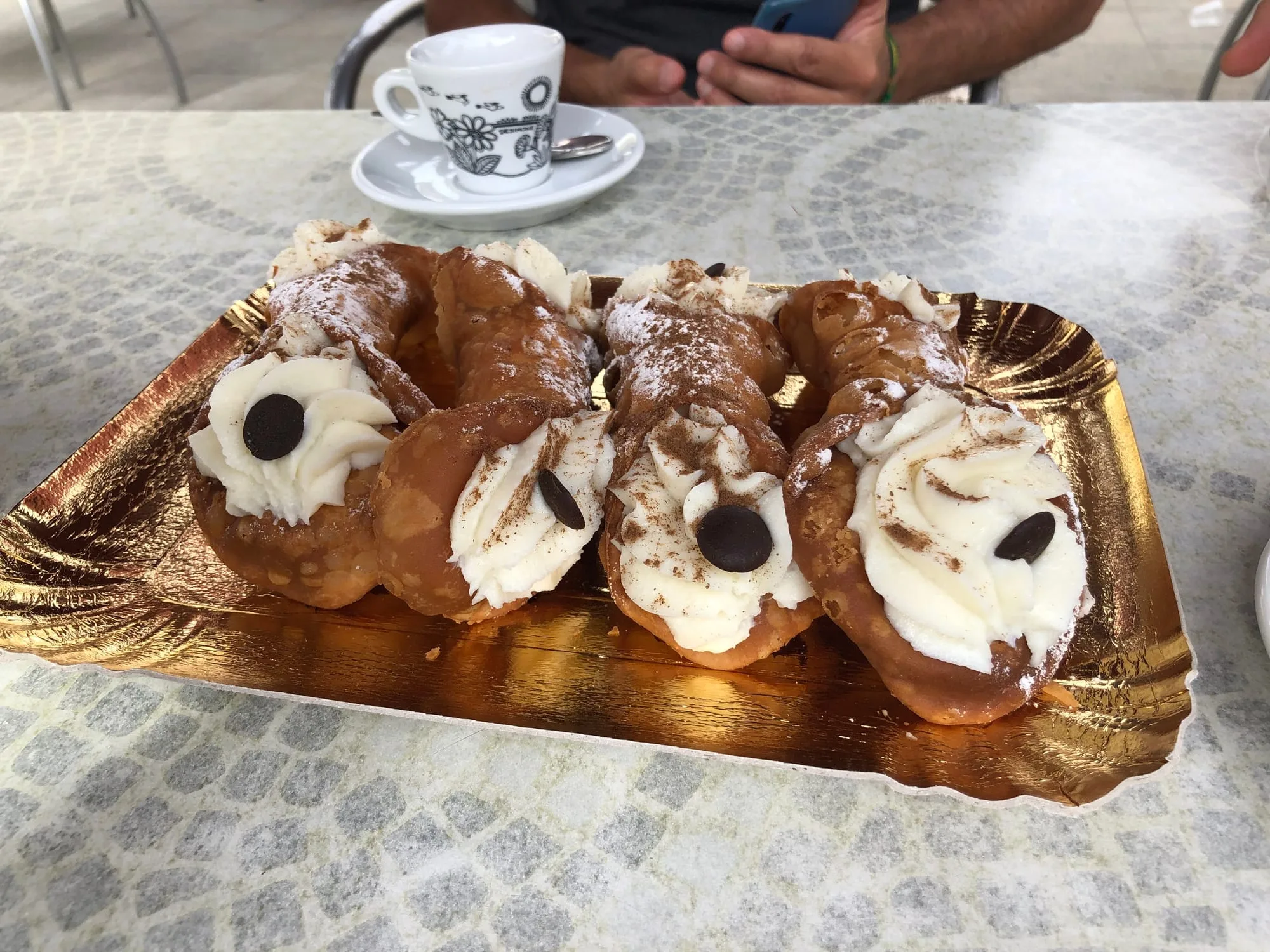
The dead who bring gifts
All Souls’ Day is one of the oldest and most deeply rooted Sicilian
traditions. In its popular form — preserved in Nicosia until recent
years — on the night between 1 and 2 November the dead returned to
the homes of the living and, for the children, left gifts:
sweets, Martorana fruit, dried fruit, small toys.
On the evening of 1 November children would write a small wish-list
and leave it under the bed or on a small table. On the morning of
2 November, before going to the cemetery, they discovered their
gifts.
What was eaten (and still is)
The typical All Souls’ sweets in Nicosia are:
- Ossa dei morti (dead-men’s bones — hard biscuits of flour, sugar
and almonds, shaped like long bones);
- Frutta di Martorana (mock fruit in coloured marzipan);
- Pupi di zucchero (small polychrome sugar statuettes —
knights, paladins, dancers);
- Dried fruit: walnuts, almonds, hazelnuts, dried figs;
- Nzuddi (hard-paste biscuits with anise or vanilla).
Mass and cemetery
On the morning of 2 November Nicosians go to the municipal cemetery
for the commemoration Mass and to visit family graves. The rite
remains strong: the Nicosia cemetery on 2 November draws ~2,000
people during the day’s opening hours.
Why we talk about it
The tradition of All Souls’ sweets is a living but fragile tradition:
it passes within families, but in younger families — smaller, less
tied to historic pastry shops, more “exposed” to the Northern European
culture of Halloween — it is slowly fading.
The Municipality and the Pro Loco of Nicosia have started in 2024 to
document the tradition through public workshops in historic
pastry shops, family interviews and photographic records of the
preparations. The goal is not to lose a practice that has shaped
the memory of entire generations.
For visitors from outside
All Souls’ Day is not a tourist event: it is a family and
religious practice. Visitors who arrive on 1-2 November find a town
quiet in the morning and warm in the afternoon. Historic pastry
shops open before dawn for those who want to watch the preparation of
traditional sweets (by booking; see the Tourism Office).