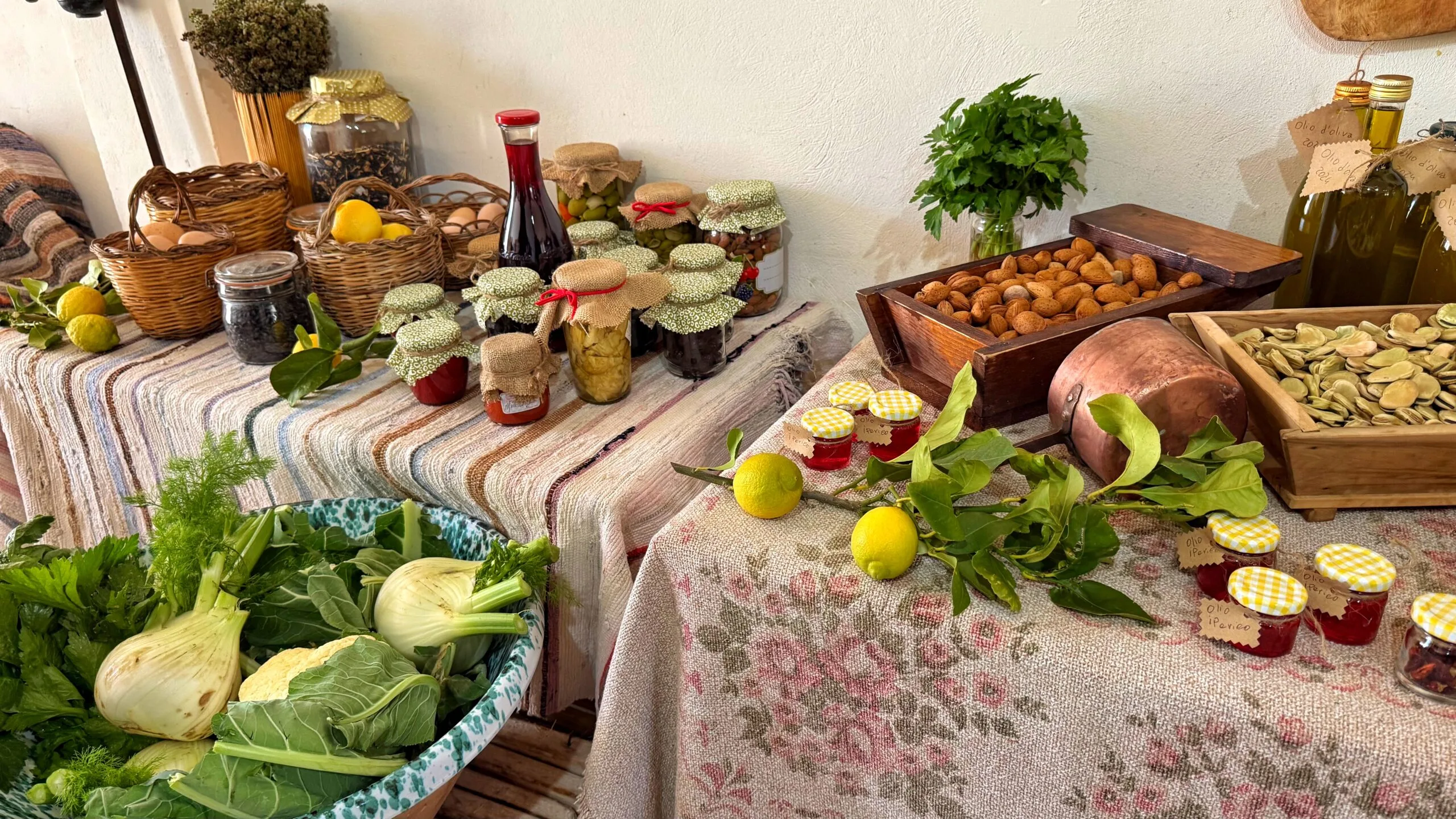
The tavolata: a practice of charity
The Feast of Saint Joseph on 19 March is one of the most distinctive
and least-known Sicilian traditions. In its popular form, the day
revolves around an ancient practice: the table of the poor.
Nicosian families who had made a vow to Saint Joseph — for instance,
to obtain a grace or to give thanks for a healing — would lay a
table with a variable number of courses in their home (typically
19, like the saint’s date, or sometimes 3, 7 or 13) and open
the house to those in need: the poor, travellers, neighbours.
It was a practice of religious charity that held together:
- the cult of the saint (Saint Joseph as the putative father of
Jesus, model of the poor family);
- the sharing of food (a sacred act, not just social);
- the transmission of recipes of poor-people’s cuisine (pasta with
bread-crumb, chickpeas, wild fennel, almonds).
The courses of the tavolata
The traditional tavolata offers simple, vegetarian dishes (Saint
Joseph falls in Lent):
- Pasta with breadcrumb (pasta with toasted bread-crumb, anchovy,
olive oil);
- Pasta with chickpeas;
- Pasta with wild fennel;
- Sarde a beccafico (in some versions);
- Stewed vegetables (cardoons, fennel, cabbage);
- Seasonal fruit (oranges);
- Bread of Saint Joseph (rosette shape with a cross in the middle);
- Sfincie of Saint Joseph (soft-batter fritters with ricotta and
candied fruit);
- Local wine.
The sfincie
Sfincie are the traditional sweet of 19 March in Nicosia. Prepared
at home or bought from a historic pastry shop:
- soft fried batter;
- filling of sweetened ricotta (sheep, local);
- decoration with candied fruit, pistachio crumbs, candied orange
zest.
In Nicosia the historic pastry shop in the centre prepares sfincie
from ~24 hours before 19 March. Orders recommended by 15 March.
The revival
For decades the tavolata tradition had become invisible, limited to
a few elderly homes. Since 2025 the Municipality and the parishes
have begun reviving it in public form:
- a tavolata in Piazza Garibaldi organised by volunteers, open to
whoever shows up;
- some private homes that open up to share the practice with
citizens and visitors.
The goal is not to let die a tradition that is at once religious,
social and gastronomic.
Visiting
- Public tavolata: free, 12:30-15:00 in Piazza Garibaldi. Booking
recommended for groups of more than 6.
- Domestic tavolatas: by booking through the Tourism Office.
Limited numbers (~50 people per home).
- Sfincie: orders at the historic central pastry shop by 15 March.
The feast is open and free. The spirit is not tourist-oriented: it
is sharing. Visitors are welcome to bring, if they wish, a small
contribution (a sweet, a loaf, some wine) to add to the table.