Where it all began
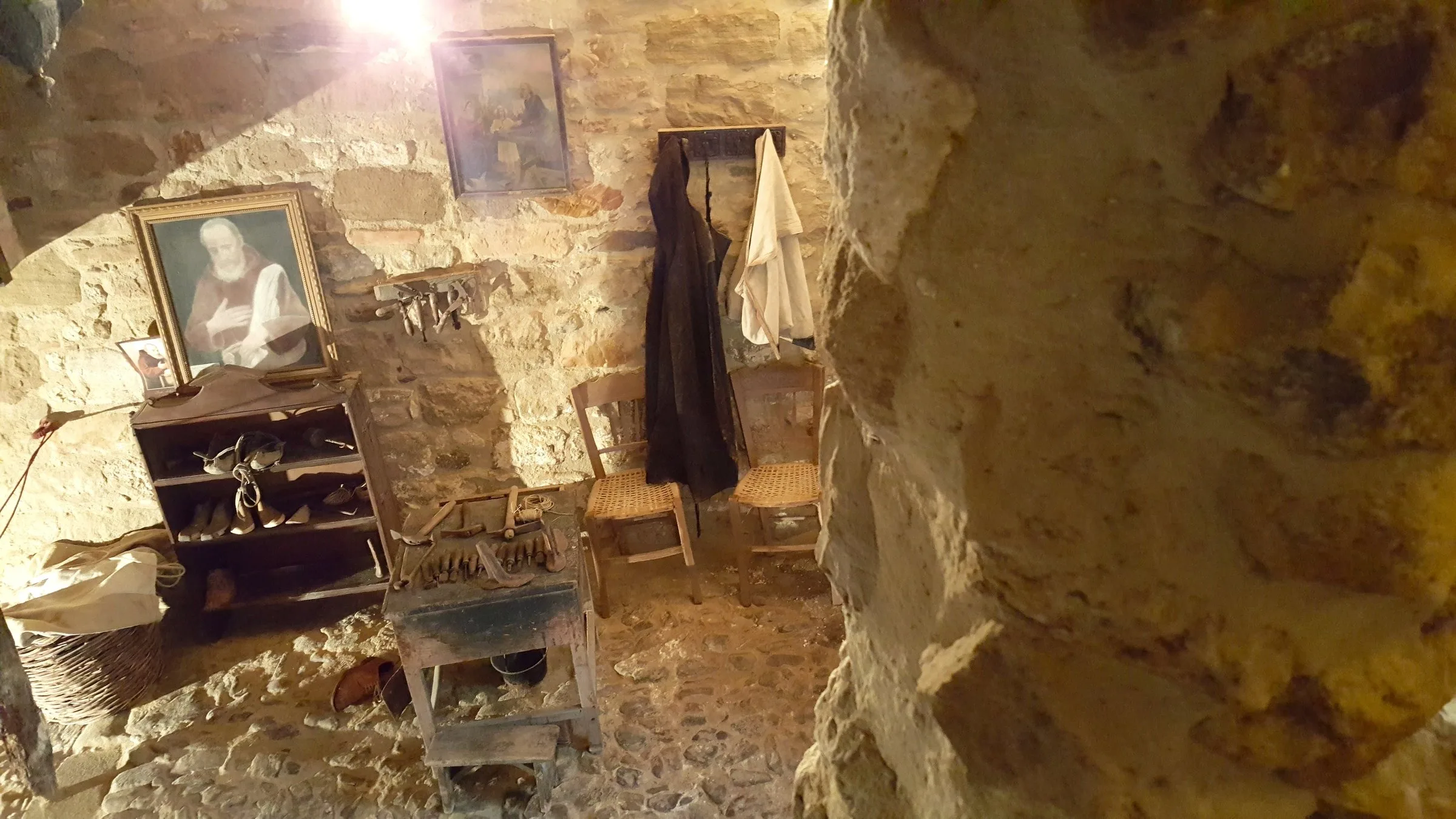
At Via Scuole Vecchie 22, in the heart of Nicosia’s historic centre, stands the house where on 5 November 1715 Filippo Giacomo Amoruso was born, the last of three children of a family of humble artisans: his father Filippo was a shoemaker. After a long, silent transformation he became the Capuchin friar Felix, today regarded as the patron saint of the town.
The house is now a place of devotion and remembrance. The sobriety of the rooms tells of the childhood of a saint who made poverty the defining thread of his journey.
The saint of the poor
Giacomo worked as an apprentice in a shoemaker’s workshop until the age of twenty-eight when, after repeated requests, he was accepted by the Capuchins of Mistretta. On 19 October 1743 he was clothed with the habit and given the name Brother Felix of Nicosia.
For forty-three years he served the community as a beggar: every day he walked the streets of the historic centre asking for alms for the friars and for the poor. Nicosian oral tradition preserves several accounts of conversions and healings attributed to his intercession, along with the extreme meekness he showed even in the harshest trials.
He died in Nicosia on 31 May 1787.
From Blessed to Saint
- 1888 — Beatified by Pope Leo XIII.
- 23 October 2005 — Canonised in St Peter’s Square by Pope Benedict XVI. It was the first canonisation of Benedict XVI’s pontificate; four other beati were canonised in the same ceremony.
The body of Saint Felix is now kept in the Sanctuary of Saint Felix at the Capuchin Friary of Nicosia.
Visiting
Access to the house is by appointment, managed by the community of the Friars Minor Capuchins of Nicosia. There are no tickets or fixed opening hours: a visit is considered an act of devotion rather than a tourist activity.
To arrange a visit we recommend contacting the Capuchin Friary of Nicosia or the Diocese of Nicosia directly. For parish groups or larger pilgrimages, the religious community remains the institutional point of reference and will coordinate access.
Vivi Nicosia is an independent editorial platform: it does not manage bookings, access or permits. The information here is drawn from public sources and from the memory of the Nicosian community.
See also: Capuchin Friary and Trail of Saint Felix, Trail of Saint Felix — annual pilgrimage.
Nearby
From the birthplace to the Capuchin Friary: a 15-minute walk through the alleys of the historic centre. This is the traditional path of the pilgrimage on 31 May, the liturgical feast of the saint.
A note of respect
The Birthplace of Saint Felix is a living place of worship, not a museum. Visitors are invited to behave appropriately: silence, no photographs during any moments of prayer, respect for the indications of the religious community.
Where it is
Via Scuole Vecchie, 22 — 94014 Nicosia (Enna), Sicily