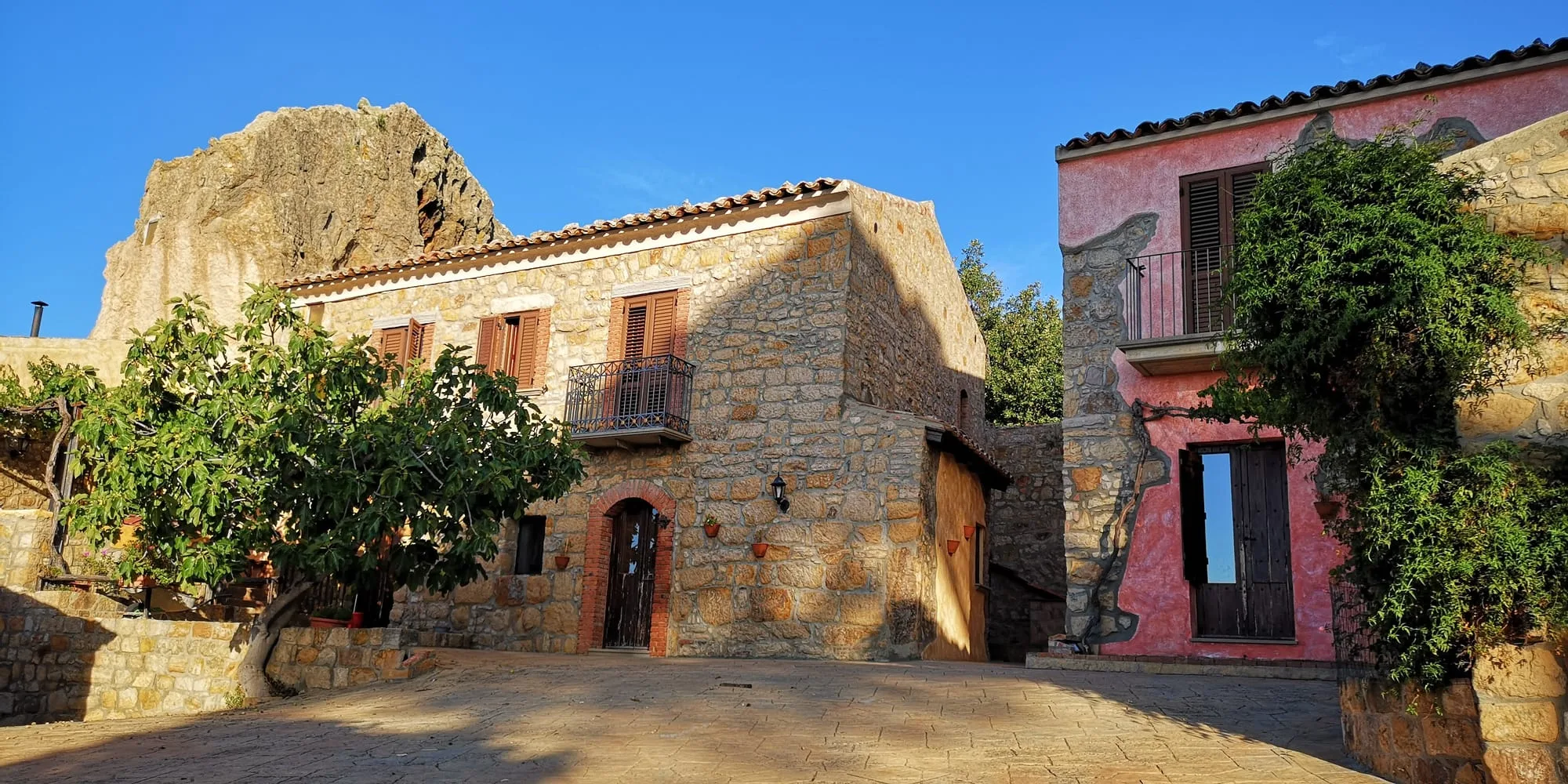
A masseria made of stone and carved rock
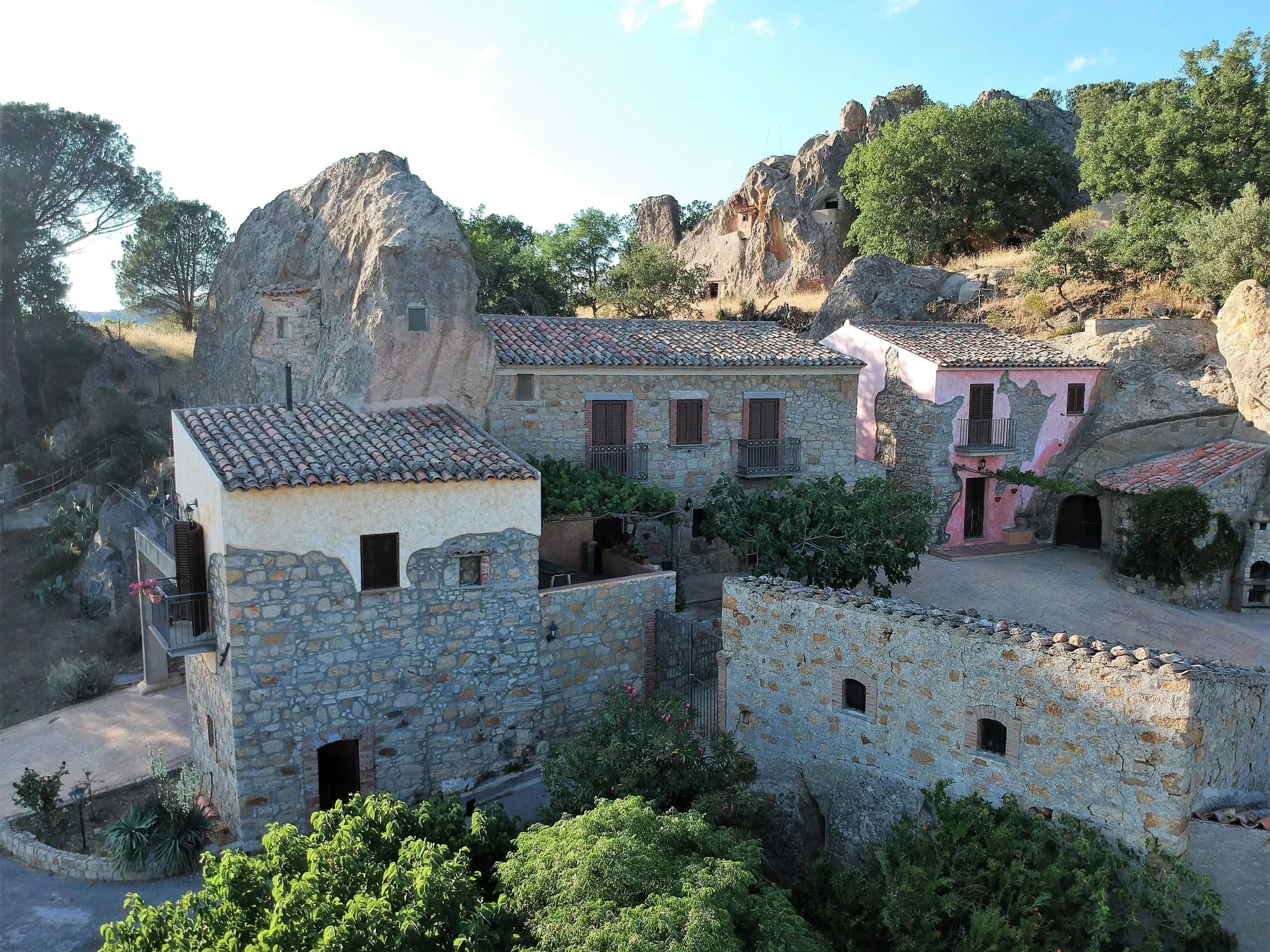
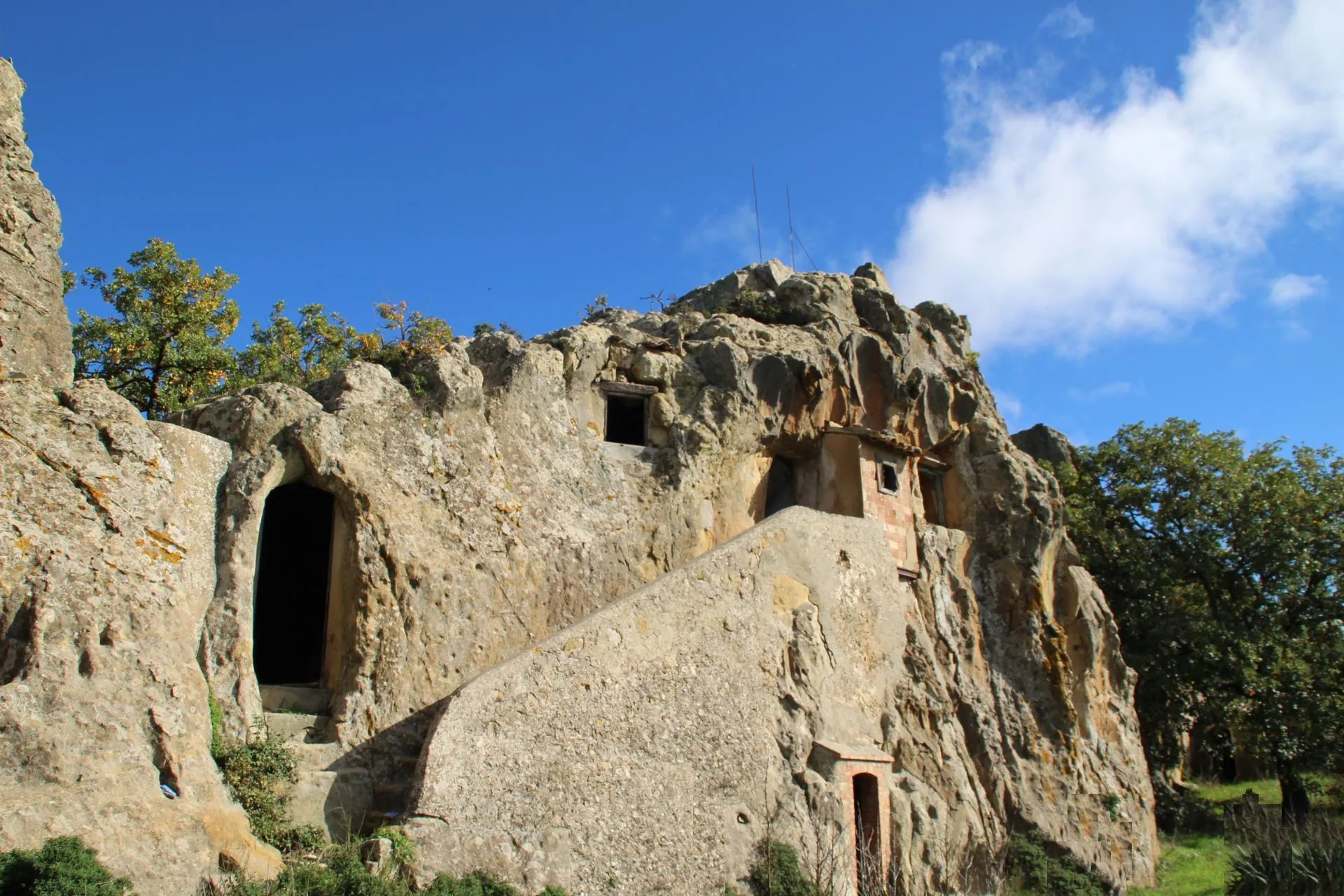
In Nicosia the rural landscape is not made only of cultivated fields and dry stone. In some districts of the territory, traditional building merged directly with the rock: houses arise leaning against or literally inside outcrops of calcarenite, with caves used as cellars, shelters, workspaces or, in other times, permanent dwellings. It is a page of the rural landscape rarely told outside specialist circles.
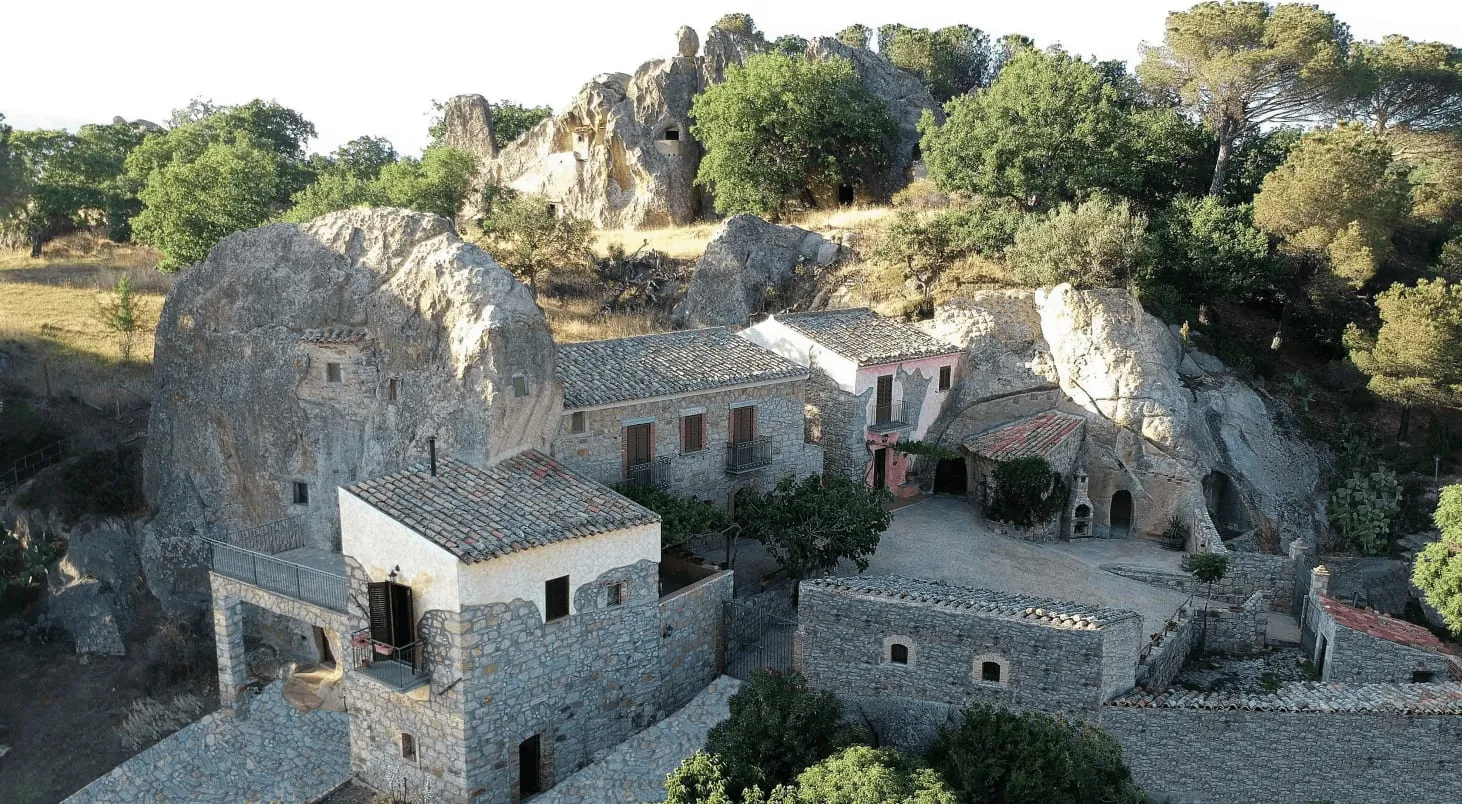
This entry gathers one of these settlements: a masseria with rock-cut annexes, photographed from the ground and from above. The complex is not a regular tourist destination — it is private property and access is arranged directly with the owners, generally on a motivated request and for small groups.
What you see
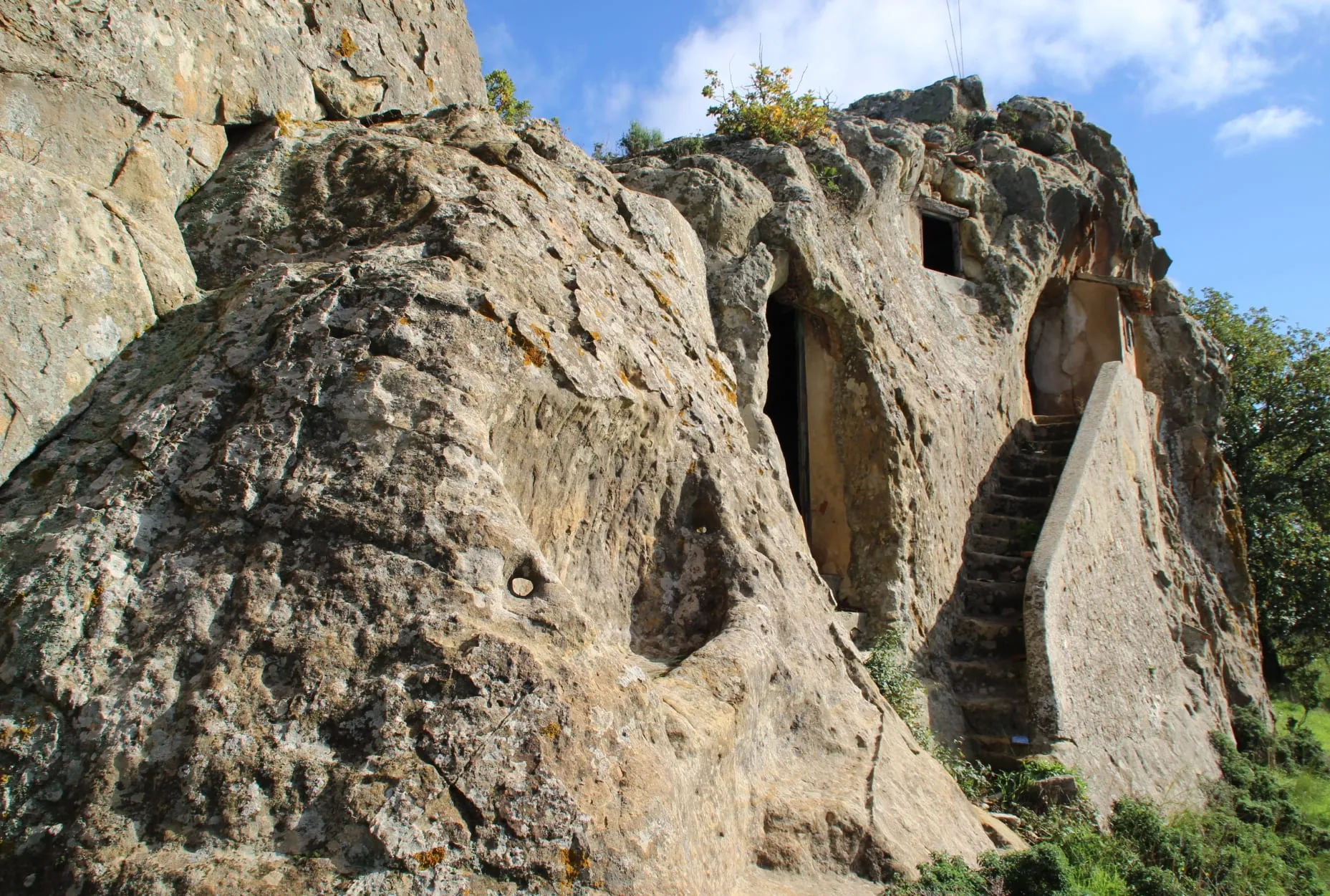
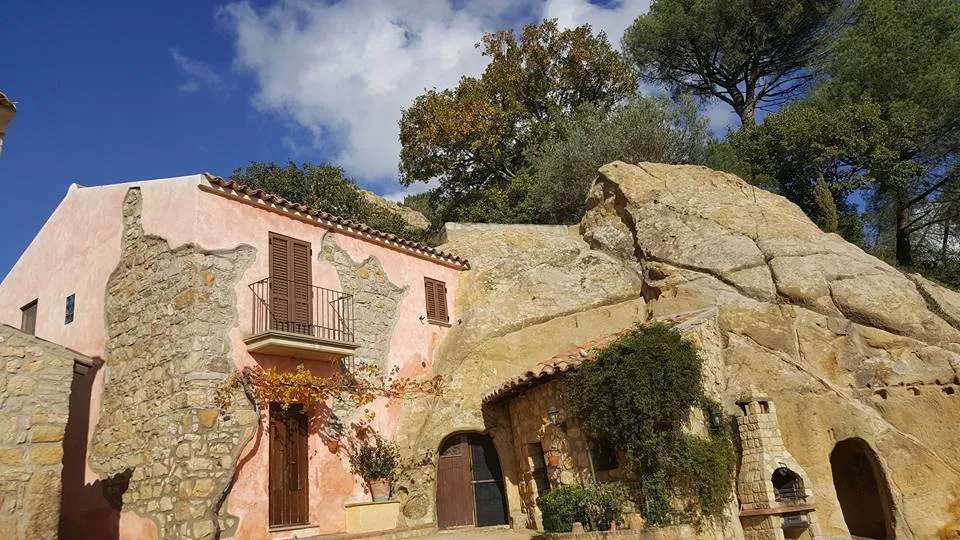
The main building is the pink house, lime-plastered, leaning against a rock formation that continues inside as a wall. Beside it, a room carved into the rock serves as a kitchen or oven; the elevation towards the courtyard shows the traces of the ancient working of the stone. Uphill, a stone staircase leads to an upper level where further rooms have been cut from the rock bank, with small openings acting as windows.
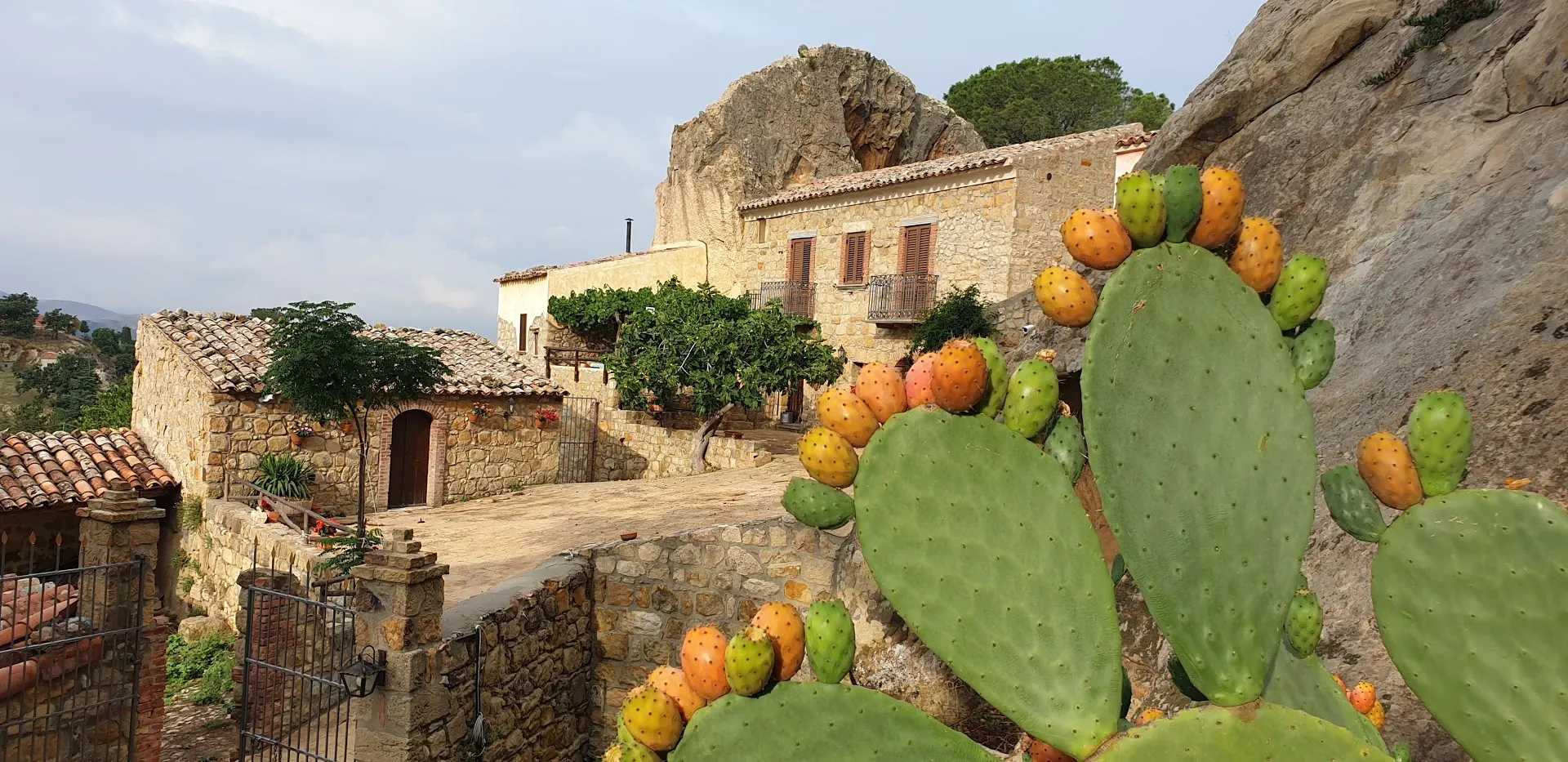
The courtyard is closed by dry-stone walls, partly rebuilt in recent years. Around it grow prickly pears, figs, olive trees and centuries-old oaks — the vegetation typical of the Sicilian interior between 600 and 900 metres. From the highest terraces the view opens onto the Nebrodi and, on clear days, as far as Etna.
Why it matters
Three things, in brief:
-
Hybrid stone–rock architecture: the masseria shows a constructive solution that at Nicosia exists in several points of the territory but has rarely been framed as heritage. The rock-cut houses of inland Sicily have long been read as “poor things,” rather than as adaptive choices to a specific geological landscape.
-
Continuity of use: the settlement is still alive. It is not an archaeological ruin under protection; it is an inhabited place, with constant upkeep, that continues to work within its own rural logic.
-
Integrated landscape: the orientation and the arrangement of the spaces maximise sun, shade and natural ventilation. The warm colour of the house and the tones of the calcarenite form a chromatic unity with the Nebrodi in the background.
Gallery
How to approach a visit
The settlement is on private property. There is no public opening time, no ticket, no continuous organised visits. The correct route is to ask for the contact directly from the Pro Loco of Nicosia or from the Vivi Nicosia editorial team: depending on the season and the owners’ availability, it is possible to arrange visits for small groups, photographic-documentation activities, or inclusion in the calendar of specific events (e.g. rural-heritage routes).
Want to visit? Write to us via assistance and we will put you in touch with the local contact.
Around the territory
The experience pairs well with:
- a stop at one of the local dairies (Albereto, Spina Santa), a handful of kilometres away;
- a visit to the Castle of Nicosia for those who want to compare rural rock-cut building with the medieval military architecture of the fortress;
- a day route on the SS120 towards Sperlinga and Cerami, where other rock-cut forms (the cave-houses of Sperlinga, carved towns) tell variations of the same settlement model.
Editorial note
This entry gathers a widespread heritage that is rarely catalogued in an organic way. Photos and descriptions come from the territory’s photographic archive. The specific historic name of the masseria, its dating and the owning family will be updated after direct verification with the owners and with historic cadastral records. If you recognise the place or have information useful to the survey, write to us.