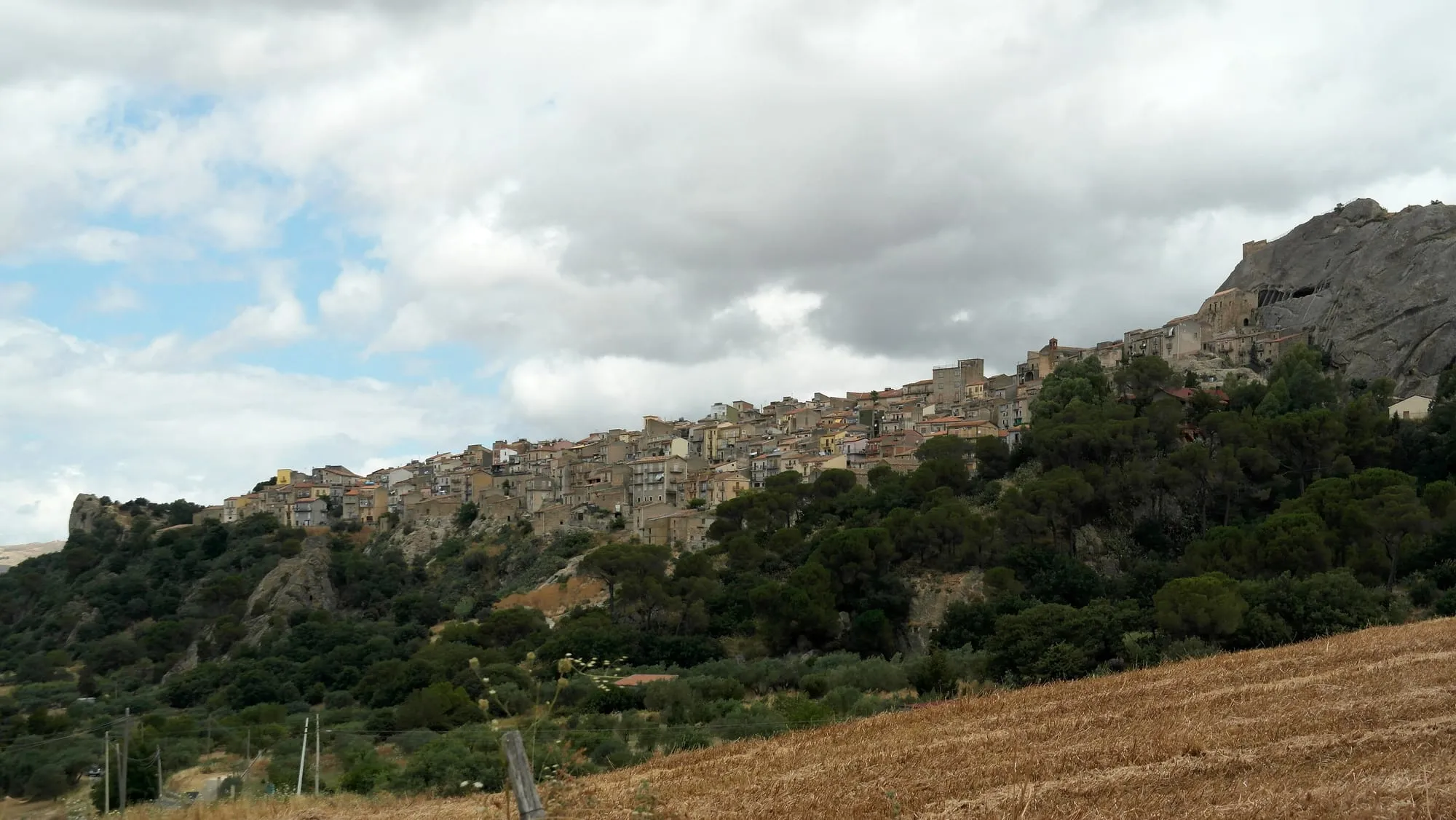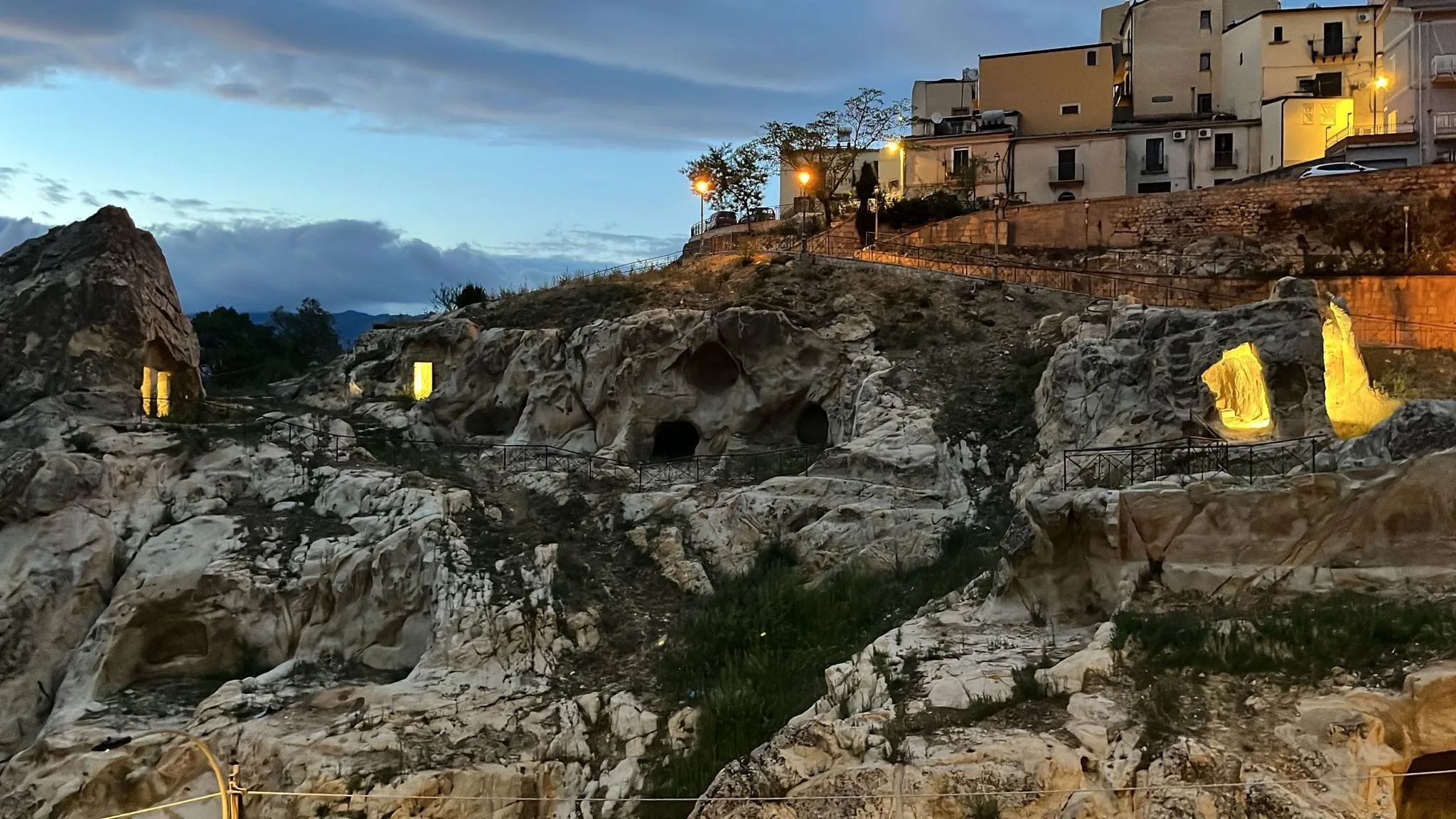
Below the Castle spur, where Nicosia shows its oldest face, the rock isn’t just foundation: it’s home. The cave dwellings are cave-homes carved into the stone and lived in from prehistory until a few decades ago. Not a postcard site with a ticket office and barriers, but a piece of the town you discover on foot, and one that tells of a way of living in inland Sicily thousands of years old.
Here’s what they are, why they matter and how to see them.
The town carved into the rock
The cave dwellings open on the south-eastern slope, below the crag of the Castle. They’re carved into the soft sedimentary rock of the hill, which lets itself be worked and becomes a load-bearing wall: the house isn’t built on the stone, it’s cut into it. This is the model of the troglodyte dwelling, one of the oldest known, used here with striking continuity — the caves were lived in into the 20th century.
Access is marked on via Nisi, among climbs and stairs that cut through the upper historic centre. There’s no single entrance and no opening time: the dwellings are part of the urban fabric, and anyone passing meets them the way you meet an alley or a stairway.
A recognised (and fragile) heritage
That they’re no folkloric footnote is confirmed by the FAI: the cave dwellings, together with the Castle, have been nominated several times to the “Luoghi del Cuore” census, in the editions between 2016 and 2022. For Italy’s National Trust they are “one of the best-preserved examples of troglodyte dwelling in inland Sicily”.
It’s a fragile heritage, though, precisely because it’s spread out and unfenced: no ticket protects it, no case separates it from the living town. Its safekeeping rests more on the care of those who walk through it than on any gate.
Rock-cut houses in inland Sicily
Nicosia isn’t an isolated case. Living in the rock is a thread running through inland Sicily, where sandstone and calcarenite have offered a ready-made shelter for centuries. The most immediate comparison is about ten kilometres away: Sperlinga, one of “Italy’s most beautiful villages”, has some fifty caves at the foot of its castle, lived in until the mid-20th century — a whole troglodyte quarter in use almost until yesterday.
In Nicosia’s own countryside the same principle returns: the Masseria with rock settlements is a rural complex built literally inside the rock, with rooms carved into the calcarenite beside dry-stone buildings. Lined up, these traces form a little-told geography: the Sicily that carved its home into the mountain.
How to visit them
The dwellings can be seen freely from the outside, on foot: they’re part of the landscape of the historic centre. To really go inside them and understand them, though, it’s worth being guided. The cave dwellings trek is three hours with a guide among the caves and the panoramic paths below the Castle, and it’s the best way to read what stays mute to the naked eye. Anyone who prefers an overview of the centre can start with the historic-centre walking tour, which holds together baronial palaces, churches and the carved town.
The cave dwellings are one of the stops on our guide to things to do in Nicosia: a good reason not to stop at the Cathedral and the Castle.
Frequently asked questions
What are Nicosia’s cave dwellings?
Cave-homes carved into the sedimentary rock below the Castle spur, an example of troglodyte dwelling lived in from prehistory until the 20th century.
Can you visit them?
Yes. You can see them freely from the outside by walking through the historic centre, with access marked on via Nisi. To go inside with a guide, it’s worth booking the cave dwellings trek.
Why do they matter?
The FAI has nominated them several times to the “Luoghi del Cuore” (2016-2022) as one of the best-preserved examples of troglodyte dwelling in inland Sicily.
Are there other rock-cut houses nearby?
Yes: at Sperlinga, about ten kilometres away, some fifty caves were lived in until the mid-20th century; and in Nicosia’s countryside there is the Masseria with rock settlements.
Sources
FAI — I Luoghi del Cuore (nominations of the Castle and cave dwellings, editions 2016-2022), heritage records of the Nicosia area, I Borghi più belli d’Italia (Sperlinga), local documentation on the area’s rock settlements.