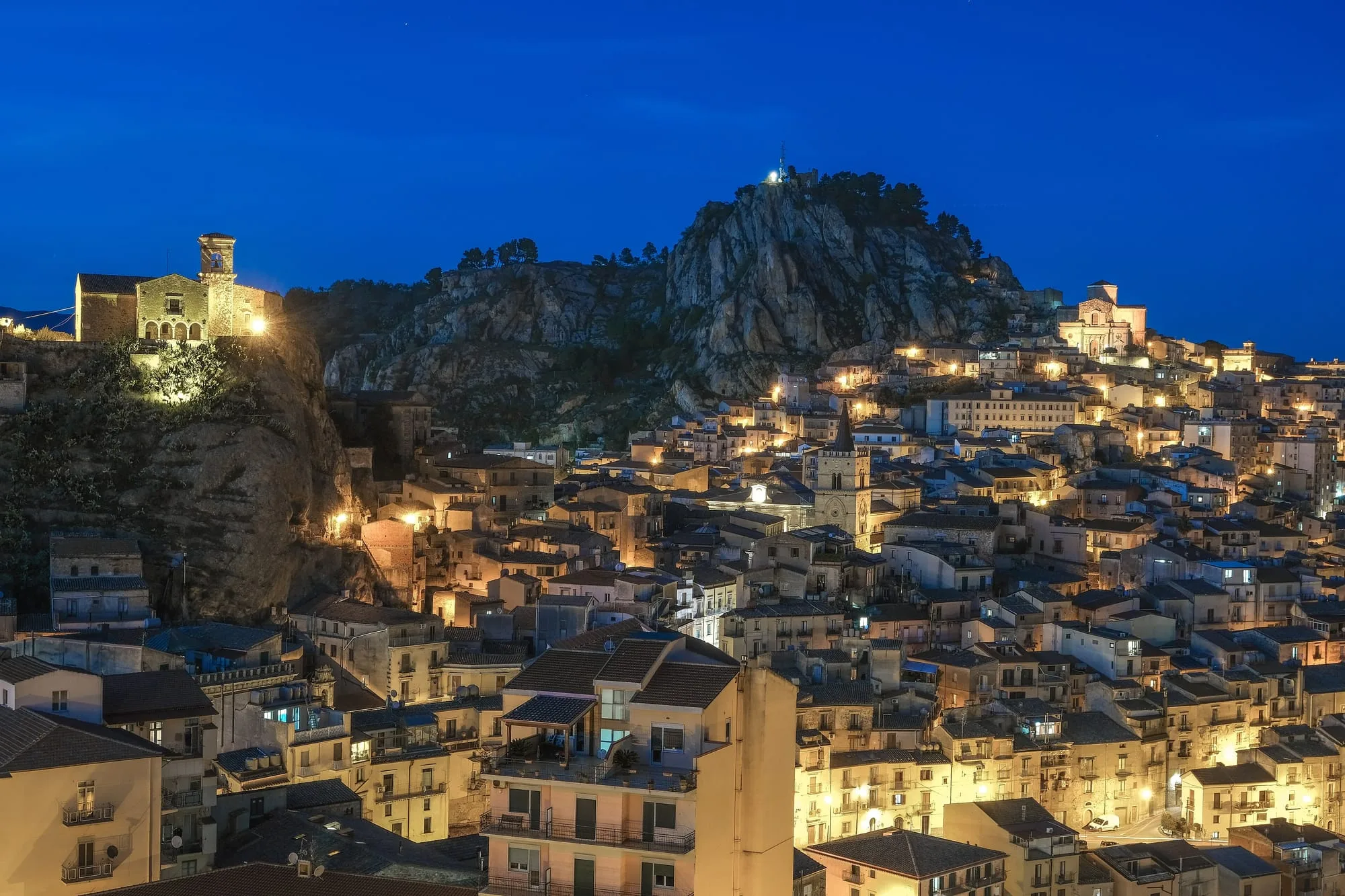
Stop in Nicosia and listen — at the market, or in the social clubs around the square — and something won’t add up: words that don’t sound Sicilian. It isn’t an impression. The Gallo-Italic of Nicosia is not a variety of Sicilian: it’s a northern-Italian speech that reached the island almost a thousand years ago and never left.
Where it comes from
Between the 11th and 13th centuries the Normans called in settlers to repopulate inland Sicily: they came mostly from southern Piedmont and the Ligurian mountains — “Lombards” in the medieval sense of the word, meaning people of the North. Their language settled here and in a handful of other communities, and has lived alongside Italian and Sicilian ever since. In Nicosia the trace survives even in the town’s layout: of the two historically rival quarters, the Mariani of Santa Maria Maggiore are of Lombard origin, the Nicoleti those of San Nicolò.
Where it’s still spoken
Sicily’s Gallo-Italic towns number six: Nicosia and nearby Sperlinga, Piazza Armerina and Aidone in the province of Enna, San Fratello and Novara di Sicilia in the province of Messina. The speech is inscribed in the R.E.I.S., the Register of Intangible Heritage of the Sicilian Region, as “parlata alloglotta gallo italico” — a Gallo-Italic alloglot speech. Nicosia is the best-known of the six: older residents still use it among themselves, at the market and in the social clubs, and it survives in sayings and nicknames.
How it sounds: one word to get it
U carrèvë simply means the cart — the vehicle that for centuries carried grain, firewood and families along the roads of the interior, and that keeps its name here in the speech of home. Not by chance it became the title of an evening of the Estate Nicosiana: U Carrèvë, on 5 September 2026 in viale Vittorio Veneto. And when the town dedicated a philatelic postmark to the Madonna del Soccorso, the back of the commemorative postcard carried an old prayer — printed in Gallo-Italic.
Where to hear it live
The main date is the Festival del Galloitalico Nicosiano: in 2026, three evenings in Piazza Garibaldi — on 7 September the comedy by the Compagnia Teatrale Briciole d’Arte, on 13 September the tragicomedy Ndria e Ntunietta staged by the students of the I.I.S. F.lli Testa, on 17 September the poetry recital of the Compagnia Teatrale Girasole. The dialect turns up off stage too: at the Sagra del Nocattolo the Gallo-Italic sketches share the programme with the tastings.
Frequently asked questions
Is Gallo-Italic a Sicilian dialect?
No: it’s a northern-Italian speech, brought to Sicily between the 11th and 13th centuries by the settlers the Normans called in, mostly from southern Piedmont and the Ligurian mountains. It lives alongside Sicilian but does not descend from it.
Which towns speak it?
Six: Nicosia, Sperlinga, Piazza Armerina and Aidone (province of Enna), San Fratello and Novara di Sicilia (province of Messina).
Where can you hear it in Nicosia?
At the Festival del Galloitalico Nicosiano in September in Piazza Garibaldi, in the sketches of the Sagra del Nocattolo — and, with a bit of luck, at the market and in the social clubs of the centre.
Sources
Treccani (Gallo-Italic communities) for origins and spread; the Register of Intangible Heritage of the Sicilian Region (R.E.I.S., “parlata alloglotta gallo italico”) for the six towns; the Estate Nicosiana 2026 programme and the Comune’s channels for the festival and the evenings. The full picture of the town is in the guide to things to do in Nicosia.