Nicosia can be visited all year round, but it’s never the same town twice. This is inland Sicily, in the province of Enna, where a mountain climate sets the rhythm: cold winters and small, close festivals, springs of processions, summers of food fairs and squares alive at night, autumns of mushrooms and foliage on the Nebrodi. Choosing when to come means choosing which Nicosia you’ll see.
This is a season-by-season guide, with links to each event’s page for up-to-date dates. The full calendar keeps count edition by edition; here we tell the sense of each period.
Winter: close festivals
The Nicosian winter is made of intimate observances. In December the town celebrates its patron with the Feast of Saint Nicholas of Bari on the 6th, and mid-month the Feast of Saint Lucy, when tradition sets bread aside for cuccìa, boiled wheat.
January brings fire: the feast of Saint Anthony the Abbot lights the bonfires and brings the animals to be blessed.
Spring: the Carnival and the Casazza
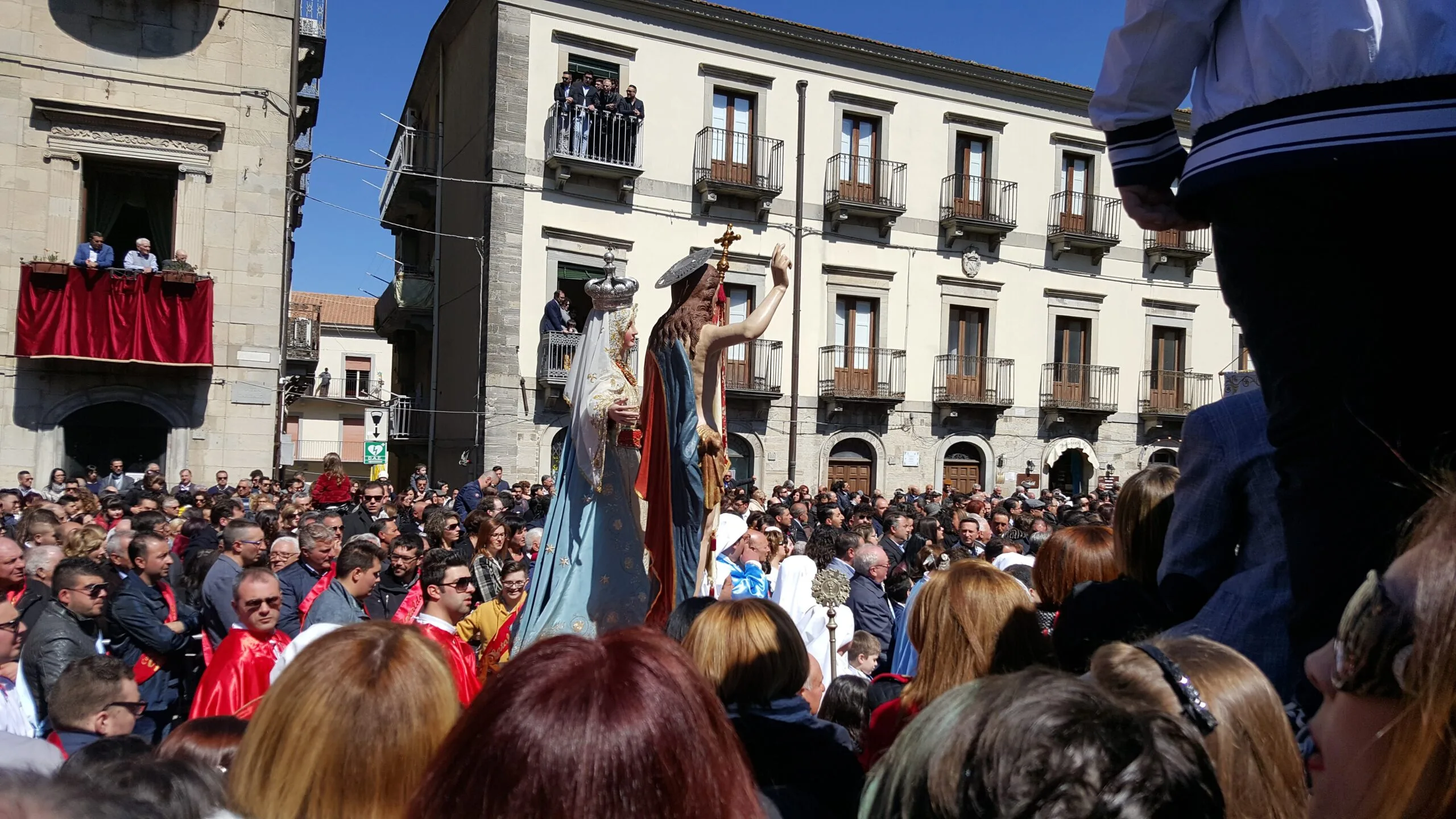
Spring is the big season. Between January and February the Historic Carnival of Nicosia takes village satire and traditional masks to the streets. But the event that alone justifies the trip is in Holy Week: the Casazza of Nicosia, the sacred pageant that Giuseppe Pitrè called “the most solemn, the most resounding” in the whole island (Spettacoli e feste popolari siciliane, 1881), back on the streets since 2016. You don’t book it: you follow the procession.
Around Easter turn the other devotions: the Feast of Saint Joseph and Tavolata in March, with its laid tables; in May the Feast of Our Lady of Aid and the San Felice Pilgrimage Trail, the pilgrimage dedicated to the Capuchin friar from Nicosia canonised in 2005, co-patron of the town.
Summer: food fairs and nights in the square
In summer Nicosia moves outdoors. June brings the Corpus Domini with Infiorata, when the streets are covered with carpets of flowers. Also in June, classic cars and vintage bikes fill the centre for the Historic Vehicles Rally. July is the turn of the White Night of the 24 Barons, while between July and August the Summer Sagre of Nicosia follow one another. Also in July, the Beer Fest brings three nights of craft beer, gourmet snacks and live music, run by four of the town’s venues.
It’s also the easiest season for the mountains and the trails, when the long days let you pair an evening festival with a day hike.
Autumn: engines, sweets and seasonal flavours
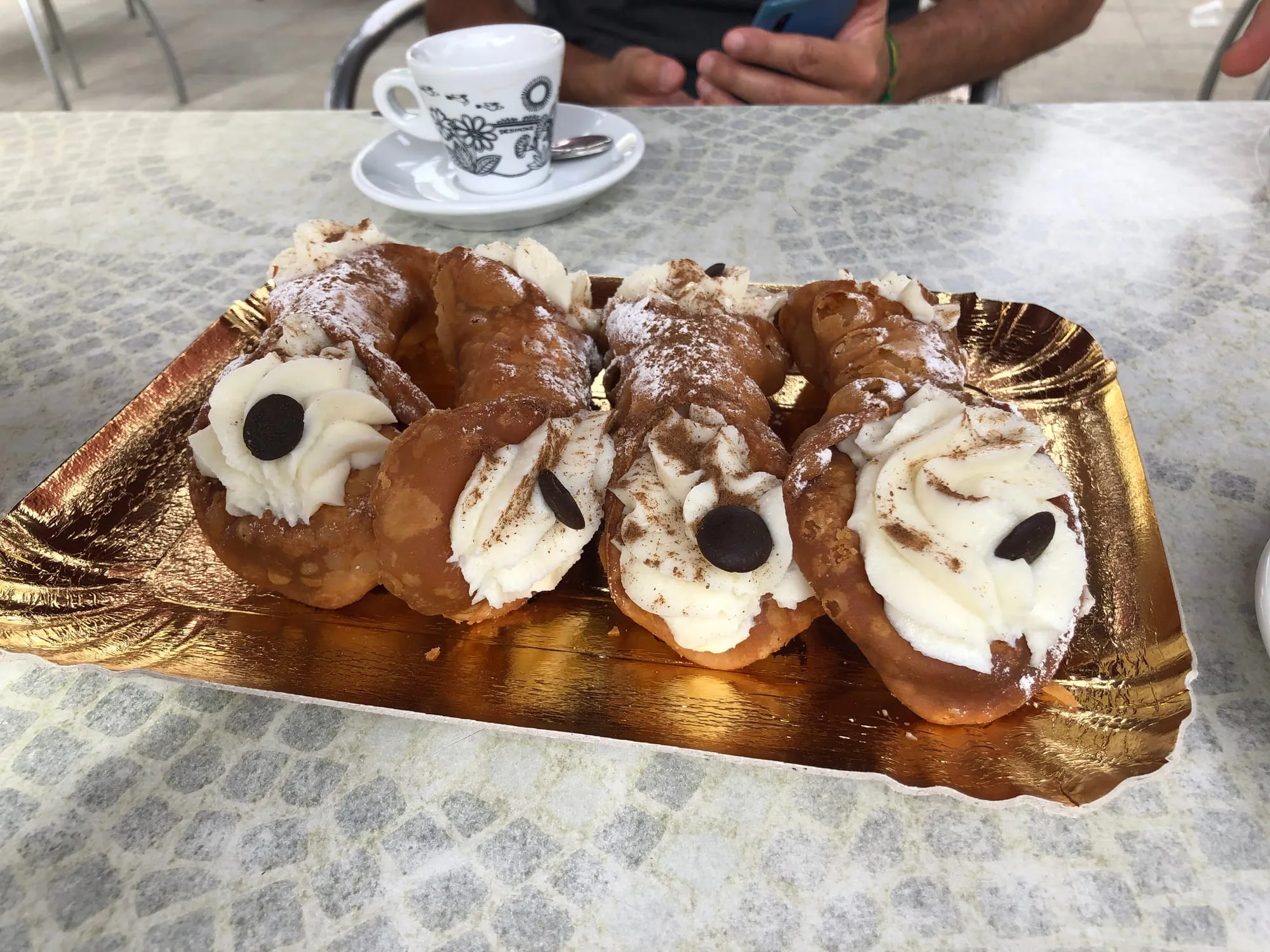
Nicosian autumn concentrates on October, the fullest month: the signature sweet takes the stage with the Festa del Cannolo, classic cars fill the town for the Gran Premio La Motta. In November All Souls’ Day brings back the sweets of the season — the frutta martorana, the biscuits — in the most deeply felt of Sicilian observances. It’s the month of foliage on the Nebrodi, when the beech forest of the reserve above the town changes colour.
If you must pick a single date
Our tip stays Holy Week, for the Casazza: it’s the event that tells Nicosia better than any monument, and it’s free and open-air. Those looking instead for the most intimate atmosphere should aim for December, between patron San Nicolò and Saint Lucy.
Whichever date you choose, the starting point in town is the guide to things to do in Nicosia; to plan the trip there’s the guide on how to get there.
Frequently asked questions
When is the best time to visit Nicosia?
It depends on what you’re after. Holy Week, with the Casazza, is the culturally most intense moment; summer is convenient for pairing evening festivals with hikes; Christmas offers the most intimate atmosphere. The events calendar keeps the dates up to date.
What is the Casazza?
A sacred pageant of Holy Week, which Giuseppe Pitrè called “the most solemn, the most resounding” in the whole island (1881), back on the streets since 2016. It’s free and followed along the procession, with no ticket.
Are there events in winter?
Yes: the feast of patron San Nicolò and Saint Lucy in December, Saint Anthony the Abbot in January with the blessing of the animals.
Where do I find the up-to-date dates?
On the individual event pages and in the site’s calendar, which updates them edition by edition. The dates of the religious festivals follow the liturgical calendar and can shift from year to year.
Sources
Vivi Nicosia events calendar (individual event pages), Giuseppe Pitrè on the Nicosian Casazza, Pro Loco di Nicosia for the coordination of the Casazza, Carnival and food fairs, local documentation on the patronal feasts and seasonal traditions.